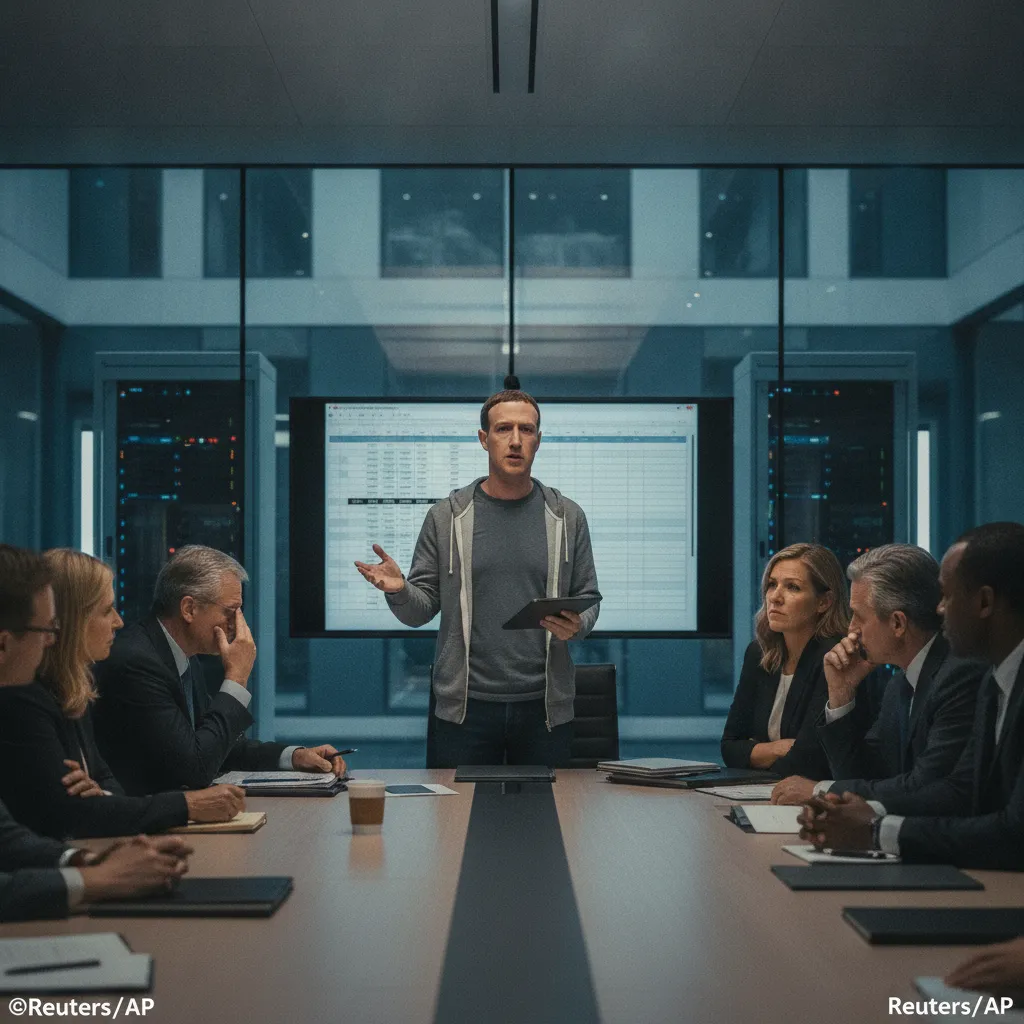
Mark Zuckerberg recently found himself caught between his desire for total corporate control and the reality of a potential multi-billion dollar tax bill. Internal documents reveal that the Meta founder considered leaving California entirely to avoid a proposed wealth tax, sparking high-stakes tensions with his own board of directors. To keep their leader in the state and near the company’s critical artificial intelligence labs, Meta has introduced a new class of non-voting Class C stock.
The move comes after months of contentious negotiations involving key board members who, at one point, reportedly contemplated resigning if a resolution could not be reached. While Zuckerberg currently wields roughly 60 percent of the company’s voting power through special Class B shares, those shares typically convert to standard stock if they are sold. This created a dilemma for Zuckerberg, who needs significant liquidity to fund his philanthropic initiatives and cover possible taxes under California’s Proposition 40 without diluting his grip on the company.
Beyond the personal financial pressure, Meta is facing its own fiscal crunch driven by an aggressive push into AI. The company has seen capital expenditures soar and free cash flow dip into the negative as it pours billions into infrastructure. Traditionally, Meta used stock buybacks to prevent Zuckerberg’s voting power from eroding when issuing employee grants or raising capital, but these buybacks drain cash that is now desperately needed for hardware and data centers.
The newly minted Class C shares provide a strategic escape valve. Because they carry no voting rights, Meta can use them for employee compensation and acquisitions without shifting the balance of power. More importantly for Zuckerberg, he can now sell portions of his holdings to satisfy tax obligations or lifestyle costs without triggering the conversion of his super-voting shares. By restructuring the equity, Meta ensures that regardless of how much money moves out of Zuckerberg’s pocket and into state coffers, he remains firmly in charge.